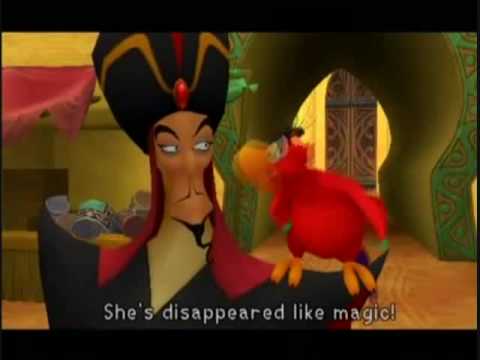
“Christian-Bashing” or Homophobia? Baptists Groups Boycott Disney.

3 Dec

Is Disney anti-family, anti-christian and morally challenged?  Well according to several Baptist Christian groups, they certainly are! Representing the 15-million Southern Baptists convention, Richard Land, head of the Ethics and Religious Liberty Commission of the 15 million-member Southern Baptist Convention, Disney is “Christian-bashing”.  In fact, Land wanted to make him statement well known to the public, so he decided, along with the religious leaders of other groups such as the Atlanta Church of the Apostles, to boycott Disney.  This of course, according to Land, came after Disney was apparently unresponsive to their expressed dissatisfaction with their movies and television show portrayals.

According to Land, Disney’s “Christian-bashing agenda” include “a scene in the animated film “Pochahontas” that shows Pochahontas as “an earth-worshiping pagan who believes in reincarnation;”, a scene in the animated film “The Little Mermaid” in which the minister allegedly becomes sexually aroused while presiding over a wedding ceremony; the film “Priest,” which portrays some Catholic priests as alcoholics and homosexuals; and the upcoming ABC television show “Nothing Sacred,” which presents “an offensive portrayal of a Catholic priest”” (12A).  Further, Land accused Disney of having a “”Christian-bashing, family-bashing, pro-homosexual, morally challenged agenda”” (12A).  Obviously from this we can see that Disney will not be receiving any profits from these Souther Baptist Church groups.

Similar to Land, Rev. Wiley Drake, from the First Baptist Church in Buena Park, just a new kilometers from Disneyland, is having problems with Disney’s new policies.  According to Drake, “the House that Walt built has degenerated into a den of inequality that openly promotes homosexuality and demeans Christian beliefs” (C1).  In January of 1996, Disney initiated a policy giving unmarried domestic partners, including same-sex companions of gay and lesbian employees, the same insurance benefits as married couples (or employees).  Drake, along with other Baptist Church members feel as though these policies represent a departure from the wholesome, Disney family image.  Boycotts such as picketing, flyers and voicing objections are just a few of the ways that members of the Church’s feel necessary in order to make a statement of their disapproval.

Further, the Church Members were extremely dissatisfied with Disney’s lesbian and gay-themed events at the Disney parks, refereed to as “Gay Days”.  Homosexual couples and individuals were offered discounts and other amenities for the three day event.

Disney, choosing not to respond to the boycott directly did make a statement.  According to Disney officials, “”We find it curious that a group that claims to espouse family value would vote to boycott the world’s largest producer of wholesome family entertainment.  We question any group that demands that we deprive people of health benefits and we know of no tourist destination in the world that denies admission to people as the Baptists are insisting we do”” (C1).  It would appear that Disney not only has a point but that if the Baptist groups are going to attack Disney, then they need to attack almost every other American corporation. Looks as though despite the attempts of the boycott and refusal to help Disney profit, they are doing just fine!!


White, G. (1997, August 14). Religious groups are urging members to ‘pledge’ to boycott Disney; Fliers, form letters cite what leaders call company’s ‘Christian-bashing, family-bashing’ agenda. The Atlanta Journal-Constitution, p. 12A. Retrieved November 8, 2010, from the LexisNexis database

Johnson, R., & Gaslin, G. (1996, June 14). Southern Baptists Boycott Disney over Policy on Same Sex Benefits: ‘Not just the gay thing’. The Vancouver Sun (British Columbia), p. C1. Retrieved November 7, 2010, from the LexisNexis database.

Goodwilldrums. (2009, February 17). The Disney Boycott: A Just Cause Part 1 [Video file]. Video posted to http://www.youtube.com/watch?v=tUHyFDV8ukw

Goodwilldrums. (2009, February 17). The Disney Boycott: A Just Cause Part 2 [Video file]. Video posted to http://www.youtube.com/watch?v=dOxifLU0Avw&feature=related

Goodwilldrums. (2009, February 17). The Disney Boycott: A Just Cause Part 3 [Video file]. Video posted to http://www.youtube.com/watch?v=OjzhrfEKcqM&feature=related


Exotic = Sex, In Disney Films

2 Dec

While there have been an increasing number of Disney movies featuring characters of color and ethnicity, it is only recently that some of these women of color are portrayed as Princesses. In the rare instances where a women of ethnicity is depicted as a princess, such as Jasmine from Aladdin or Pocahontas from Pocahontas the characters are portrayed to be extremely sexualized compared to the white princesses such as Belle from Beauty and the Beast.


It is interesting to see that when Disney does depict a leading character that is not blonde-haired, blue-eyed, and fair skin she is provocatively dressed with emphasis on the exotic. Jasmine is depicted as a stereotypical Arabian princess with a belly-bearing attire and long flowing dark hair. Pocahontas is similarly portrayed with bronze skin, scantily dressed, and modelesque stature.  Both these characters are vastly different than the white princesses that were portrayed before them.

 Both these princesses are also depicted as more defiant and out-spoken than their Caucasian counterparts. Jasmine refuses to listen to her father and chooses to marry for love rather than for political purposes and Pocahontas goes against her father and her tribe and chooses to save John Smith. Princesses such as Belle and Cinderella are portrayed as wholesome and demure in the way they dress and act, they are always fully dressed and obedient. Belle is always with a book in hand and Cinderella does everything her stepmother tells her to do.

 So, why is it that these Princesses of color are depicted as over-sexualized? I believe that it is in order to give off that “exotic” effect. Ultimately, Jasmine and Pocahontas have Caucasian features. What sets them apart as being foreign are their darker complexion and their sexualized personas. Disney has built its empire on “Fantasy” and the sexualized exotic characters are an extension of that fantasy.

Disney’s Monopolization of Tween Market

1 Dec

Disney’s monopolization of the tween market is undeniable and unavoidable when considering the entertainment for that age group. Disney selects a few tweens to develop into stars, and shapes them into celebrities that will dominate the market for them to profit off of.

One article depicts this phenomenon in a very concise way. Boorstin and Wheat discuss Hillary Duff’s progression through the ‘Disney machine’ in their article, “Disney’s Tween Machine.” Disney caught her when she was only 12 years old and featured her in a weekly series called “Lizzie McGuire”. Disney also aired the show every Saturday on a sister network, and published twelve books featuring Lizzie McGuire, the character which Hillary Duff played. The television show started to air every day, and Disney put out a soundtrack to the series, as well as dolls, notebooks, writing utensils—everything imaginable. Lizzie was a hit! Lizzie McGuire was also linked to a clothing line featured at Kohl’s. Later, a Lizzie McGuire movie and soundtrack were released. Although it is not completely certain, “it’s reasonable to assume that the amount (Lizzie has earned for Disney) is nearing $100 million.” Hillary Duff became an empire in the tween market. How could anyone compete with ‘Lizzie McGuire’? No other company has the amount of power that Disney does to be able to cross market, and invade every aspect of a tween’s life like that.

The modern day Lizzie McGuire is following right in Hillary Duff’s footsteps. Her name is Hannah Montana, performed by Miley Cyrus, and her franchise exceeds that of Lizzie’s. She put out a movie, through Disney of course, titled, “Hannah Montana: The Movie”. According to the Wall Street Journal, “it opened in the U.S. with $34 million in ticket sales over the Easter weekend.” Disney has also put Miley Cyrus through this tween celeb machine, and succeeding in their main goal—raising profits. In Ray Waddel’s article, “Touring: Rock Solid”, he presents a chart with revenue figures from various celebrities tours. Miley Cyrus enjoyed $34.7 million in total gross, while performing to almost 350,000 tweens in only 23 shows. That smells like a Mickey Mouse monopoly.

Boorstin, J. & Wheat, A. (2003.) Disney’s Tween Machine. Fortune. Retrieved November 30, 2010, from http://web.ebscohost.com.silk.library.umass.edu:2048/bsi/detail?vid=3&hid=104&sid=88fd5d56-79e0-4e3b-90fb-4868bbf78438%40sessionmgr111&bdata=JnNpdGU9YnNpLWxpdmUmc2NvcGU9c2l0ZQ%3d%3d#db=buh&AN=10856938

Wall Street Journal. (2009.) ‘Hannah’ Movie takes top spot in box office.Vol 253, Issue 85. Retrieved November 30, 2010, from http://web.ebscohost.com.silk.library.umass.edu:2048/bsi/detail?vid=10&hid=104&sid=88fd5d56-79e0-4e3b-90fb-4868bbf78438%40sessionmgr111&bdata=JnNpdGU9YnNpLWxpdmUmc2NvcGU9c2l0ZQ%3d%3d#db=buh&AN=38126414

Waddell, R. (2010.) Touring: Rock Solid. Billboard. Vol 122, Issue 29. Business Source Premier. Retrieved on November 30, 2010, from http://web.ebscohost.com.silk.library.umass.edu:2048/bsi/detail?vid=10&hid=104&sid=88fd5d56-79e0-4e3b-90fb-4868bbf78438%40sessionmgr111&bdata=JnNpdGU9YnNpLWxpdmUmc2NvcGU9c2l0ZQ%3d%3d#db=buh&AN=52476198

Maybe Disney’s Not So Bad…

1 Dec

It’s not a secret that Disney gets a lot of scrutiny for its virtual take over of our society. Children and adults alike seem to be obsessed with the Disney name and all that it has to offer. Disney is often ridiculed for being too fantastic and overly optimistic, but this may not be such a bad thing. In his article “Disney World as Structure and Symbol”, author David Johnson portrays Disney in a slightly better light than its critics.

Johnson reminds his readers that Disney World is a foundation of shared culture for people all over the world. In a day and age where the world is scary and unpredictable, Disney serves as a safe haven where people of all different ages can go retreat into their own fantasy for a while. The thematic images of work, leisure, and play, that Disney displays in their parks are familiar to the public and allow people to identify to their own lives while still getting the chance to escape. 

Johnson, David M. (March 5, 2001). Disney World as Structure and Symbol: Re-Creation of the American Experience. The Journal of Popular Culture. November 11, 2010. http://onlinelibrary.wiley.com/doi/10.1111/j.0022-3840.1981.15412157.x/abstract


Can’t Afford It? You’re Not Out of Luck

28 Nov

At least Amanda Coggin knows there’s an alternative to the magical expensive world of Disney.  Save money, introduce your kids to new characters and attractions, and still have fun!

(2)

While cost varies for different sized families and various accommodations, DisneyMadeSimple.com, a site with zero affiliation to the Disney Company, recommends sticking to the $50/person/day plan (3).  Others estimate their vacations coming out to about $1,000/person.  Seems a little excessive for a four year old who might not even remember the trip a few years down the road.  Check out this website for helpful planning tips.

(1) Coggin, Amanda. (2008, August 18). Ditching Disney: Ten Theme Park Alternatives. Message posted to http://www.divinecaroline.com/22213/45807-ditching- disney-ten-theme-park

(2) WellHeeled. (2009, November 25). Paid off My Disney World Trip (aka My Most Expensive Vacation Ever). Message posted to http://www.wellheeledblog.com/2009/11/25/disney-world-trip-most- expensive- vacation-ever/

(3) Budget Worksheet. Disney Made Simple. Retrieved November 30, 2010, from http://www.disneymadesimple.com/disney_world_budget.html

An Anthropologist’s Inside View of Disney

22 Nov

Anthropologist Jean Baudrillard decided to take a closer look at the Disney parks. Digging deeper than just observing how the parks run on a day to day basis, Baudrillard has discovered some important, not so talked about secrets Disney tries to keep hidden. Through her research she has come to discover that the “real” that Disney portrays is just and illusion of real. Disney has the ability to alter human desires, and uses techniques to make us believe that we not only want but NEED them and their products. At this rate, Baudrillard believes that there is no reason why Disney wouldn’t take over the human Genome. However, Disney is not alone in this process. It is part of a much larger conglomerate of society today that tells us how our imagination should work, and instructs which technologies to use and how, and makes us believe that we will not be functional members of society if we stray from this path. According to Baudrillard, we are no longer spectators, but extras in a world of virtuality.

Baudrillard, J. (1998). Disney World Company. Temporary National Theatre. November 9, 2010. http://temporarynationaltheatre.dk/TEXT/DISNEYWORLD_COMPANY.pdf

Is the Suspense Killing You?

16 Nov

Although I have not seen the movie myself, I recently read an article (1) by B. Barnes that went hand in hand with the many complaints I had heard regarding the new Disney movie “Toy Story 3.” The typical story goes like this:

“I was so excited to see the newest Toy Story (since I saw the first one as a kid) that I waited on line for a ticket for what seemed like hours. After a good 45 minutes online an announcement was made that this specific viewing had been sold out. I then left in disappointment and ordered tickets online for a different showing later on. I arrived for the later showing with pure excitement and joy… and then just as Woody and Buzz were going for the great escape… it was over.”

Uh oh. Disney had used a cliffhanger- leaving it’s audience in great frustration and anticipation for a potential “Toy Story 4.” Is this another clever marketing strategy of Disney? I think so.

This example reminds me of the “Disney Vault.” The vault is where Disney “hides” it’s movies from stores and homes around the world until it feels like making a large sum of money on a re-release day. Then, several days or weeks later, it is thrown back into the hidden vault for what seems like forever until the point is reached in which the movie, most likely originally released back in the 1980’s, seems like new again. Everyone is left in suspense for when the movie will be released in stores yet again just like they are in theaters after watching “Toy Story 3.” The suspense kills them… and their wallets.

(1) Barnes, B. (2010) Disney uses cliffhanger to market ‘toy story 3’. New York Times, 5/1/10. Retrieved from the Academic Search Premiere Database

All that Glitters Ain’t Gold

16 Nov

Apparently there is a new “bridezilla” in town says R. Setoodeh and J. Yabroff in their article “Princess Power” (1)- her name is “princesszilla.” This princesszilla is one very lucky girl- she is worth about $4 billion and is said to be just about the most successful marketing venture ever. Sadly, this princesszilla does not actually exist in human form. She is made up of products from the Disney Princess line launched in 2000 and works her way into homes of little girls (and now adults) everywhere. Her many faces are branded onto everything from ice shows, to DVD’s, to books, to sleepwear, to toys, to dolls, to wedding gowns and now even house wares, credit cards and Mac Cosmetics. Either this is one very popular girl, or her main man, Walt Disney, is an excellent marketer. I’ll go with the latter.

I often wonder what it is that makes Disney’s products, more specifically princess products, so enticing to purchase. Is it the glitter? The pink, the purple? The actual movies themselves? The desire to hold a Disney doll in your hands as if you have just found a new best friend? I’m not too sure that any of these reasons can be all that true because think about it… there are several other companies such as Barbie that create similar “girly“ commodities, but the success rate of their products is not as high, long lasting, and successful in as many age groups as Disney.

After doing some research, I came across and article by A. Donahue entitled “The Mouse that Roared in Retail” (2), that helped me form a better understanding of the marketing strategies behind Disney’s Princess product success rates. Some of the key ingredients to their princess marketing strategies are:

-Targeting at an age range where girls are old enough to want to grow up, but young enough that they still want to play.

-Working closely with stylists to help girls see what Disney thinks would be popular, or take from what they are actually doing.

-Taking a “style-guide” to retailers for orders 18-24 months before the products will be sold in stores which will help serve the quick turn over of clothing merchandise in addition to giving an ample amount of time to manufacture.

-Not advertising with blunt, “in your face” campaigns because many viewers (even tweens) are more sophisticated than that these days.

– Advertising in a way that makes girls look up to these princesses, so they therefore want to be them and need to have their products to do so.

– Getting into the “DNA” of the show or movie to see what it is about it that appeals to females of all ages.

-Creating a large variety of product diversity.

-Crafting pitches based on the audience that each retailer attracts (ex. Walmart attracts a different audience than Target.)

After discovering some of Disney’s main marketing strategies my one and only response was- “Wow.” On one hand I want to give Disney a round of applause for creating such effective strategies that help them market to females of all ages, but on the other hand I want to scream at them for forcing themselves into the minds of such young and innocent girls. So is Disney really as “kid” and “family friendly” as they are cracked up to be? I don’t think so. I don’t know many moms and dads who would appreciate anyone forcing commodities and mature ideas into their young daughters’ minds.

(1) Setoodeh, R, & Yabroff, J. Princess power. Newsweek, 150 (22), Retrieved from the Ebsco Host Database

(2) Donahue, A. (2009) The mouse that roared at retail. Billboard, 121 (30), Retrieved from the Ebsco Host Database

A New Kind Of Royal Couple

16 Nov

Disney’s most recent animated princess movie, The Princess and the Frog, is achieving a lot of firsts, it is the first traditionally animated film Disney has made since 2004’s Home on the Range, it features the companies first African American princess, and features one of the first interracial couples for Disney animated films. 

Prince Naveen has a French accent and a tan complexion while Tiana is African-American. The race issue is not mentioned in the movie, which is a good thing because by drawing more attention to it makes it seem as though there is something wrong or different with an interracial relationship.

 In a Newsweek article, A Frog of a Different Color, it addresses the issue about how race is still somewhat of an issue to African-American women, who still prefer to have relationships within their race. 

“Since the 1960s, marriages between black men and white women have been steadily increasing–14 percent of all black men are now married outside the race. Yet only 4 percent of black women do the same. Why? Black women, for better or worse, have always seemed to maintain a loyalty to the ideal of the black family unit.”

While it is easy to say, “Let’s do what the fictional Disney princess does” the portrayal of an interracial couple will allow little girls to be open-minded when it comes to love. It sends the message that race is not an issue and not something to be inhibited by. Disney is sending a positive message to not think about color when they are looking for their Prince Charming.


Samuels, A. (2009). A Frog of a Different Color. Newsweek, 154(22), 56. Retrieved from Academic Search Premier database.

Is Disney “Anti-Arabs” or are they just Ignorant?

16 Nov

Recent studies have shown Arab advocacy groups fighting against the Disney Company.  This past August a Muslim employee in Disneyland’s Grand California Hotel was sent home from work with no pay because she refused to take off her hijab while working as a hostess in one of the hotel’s restaurants.  Her name was Imane Boudlal.  She filed a complaint against Disney with the U.S. Equal Employment Opportunity Commission, whose job it is to enforce anti-discrimination laws in the workplace.  Now, is Disney serious? This seems a little rash and racist.  According to Disney sources Boudlal’s hijab did not fit the “Disney look”, so she could either take it off, work in the back where no one would see her or go home (1).

Boudal, along with the Council of American-Islamic Relations, Greater Los Angeles Area (CAIR-LA) sent a letter to Disney demanding they edit their “look” to account for religious accommodations, which of course, is in the Constitution! What the hell is wrong with Disney?! They have Arab characters in Aladdin wearing their Hijab’s in the movies but a hostess in their restaurant cant wear one for religious purposes? An advocacy group called UNITE HERE represents thousands of employed individuals in hospitality, gaming, food service, manufacturing, textile, laundry, and airport industries throughout North America. Its no wonder Arab Americans such as Boudlal join such groups!!

However, Arab advocacy groups such as The American-Arab Anti-Discrimination Committee (ADC) are protesting Disney for more than just its unfair treatment of its employees and their “look”.  ADC fights Disney because they feel that Disney portrays Arabs in a stereotypical way that reflects negatively on Arab Americans.  In a July 1966 issue of Disney Adventures, Disney’s children’s magazine, the issue had a story claiming how Arabs greeted one another, which many Arab’s were offended due to its false claim.  The issue stated that to “”greet somebody Arab-style” one must “grab a friend and blow in his face at the same time he blows into yours! Just don’t turn your head to avoid your buddy’s breath.  Arabs consider that a major insult!”” (56)  As we can clearly see Disney is presenting Arab’s in a negative light and making inaccurate claims!

What Disney is forgetting, that these advocacy groups have a problem with, is that young children see and read what they put out, so they may develop negative images of Arabs or find them to be very different from them, which can only propel further racist issues! I mean isn’t Disney supposed to be child friendly and support children, OF ALL RACES?!?  Arab children are offended by these statements made by the Disney Company.

Further ADC along with other Arab-Americans had serious complaints about the movie Aladdin when it was first released.  In the introduction to the song, there is a line that says “where they cut off your ears if they don’t like your face”.  It should not be a shock to anyone how racist and stereotyping and just wrong it is to put lyrics like that into a children movie! The last thing ADC wants is to allow Disney to reinforce such negative stereotypes about Arabs that will leave lasting impressions on new generations of impressionable children.  It took six months of protesting, but Disney finally decided to substitute alternative lyrics to the films video release.  In the Video below, you can see what they changed the lyrics too and why (original lyrics written in RED).

According to Albert Mokbiber, President of the Arab-American Anti-Discrimination Committee, “We’re not looking for people to portray Arabs as angels. We’re just saying lets have a little balance and a little reality.”  This is reasonable, is it not?? The ADC is working still to petition Disney to remove to word “barbaric” from the offensive song that is the introduction to the movie Aladdin. In the video below, we can clearly see Disney does not portray Arabs in the most positive lights.  In fact, could we even say, “barbaric”??

According to Jack Shaheen, professor of mass communications at Southern Illinois University and author of “The TV Arab,” who was involved in the “Aladdin” negotiations, “When imagemakers portray any group, if they were to think of the group as they would their own, that person as they would someone of their own color or heritage, then we would see different, more balanced films”.  Maybe Disney should take a page out of Shaheen’s book!!!

Lumetta, G. (n.d.). Arab-American Activism: ADC Continues Protests Against Disney Stereotyping. Washington Report on Middle East Affairs. Retrieved November 9, 2010, from http://wrmea.com/backissues/1096/9610056a.html

Shelton, L. (2010, August 19). UNITE HERE: Disneyland Employee Sent Home for Wearing Hijab. PR Newswire, p. 2. Retrieved November 9, 2010, from the LexisNexis database

Strauss, B. (1993, July 29). Protesting the Movies. BPI Entertainment News Wire, p. 4. Retrieved November 7, 2010, from the LexisNexis Academic database.

Strauss, B. (1993, July 25). Interest Groups Rally Their Forces; Movie Stereotype Face Vocal Opposition. Chicago Sun Times, p. 3. Retrieved November 6, 2010, from the LexisNexis Academic database.